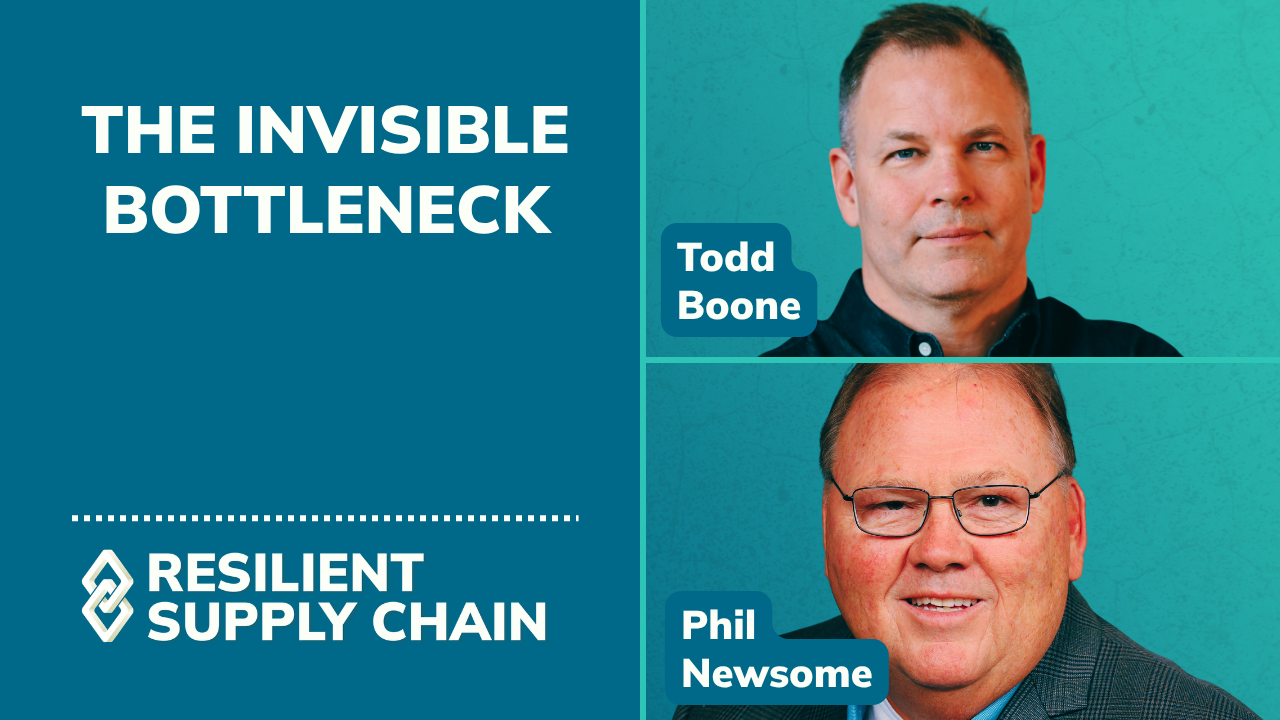
From trailer dwell to warehouse delays, the conversation explores why stronger supply chain performance starts with better execution across the yard and dock.
Supply chain disruptions don't always begin on the highway or inside the warehouse. Often, they start in the spaces between—where trailers wait, information gets disconnected, and small operational inefficiencies create larger downstream challenges.
At Lazer Logistics, we know that what happens in the yard doesn't stay in the yard. It directly impacts dock productivity, freight movement, and the ability to keep operations running efficiently.
That's the perspective Lazer Logistics Chief Operating Officer Phil Newsome brings to the latest episode of the Resilient Supply Chain Roundtable, titled "Misplaced Pallets, Buried Trailers: The Hidden Causes of Supply Chain Delays."
The conversation examines some of the most persistent challenges in logistics operations, including trailer dwell, yard prioritization, inventory accuracy, labor constraints, and the disconnects that can occur between physical operations and the systems designed to manage them.
But identifying bottlenecks is only part of the equation. Improving performance requires more than technology alone. It takes operational discipline, accurate information, and coordination across the yard, dock, and warehouse to turn visibility into action.
With 30 years of experience supporting complex yard operations, Lazer understands that the yard is not simply a place where trailers are parked. It's a critical part of supply chain performance.
Hear Phil's perspective on the operational realities behind supply chain delays and what it takes to build more connected, efficient, and resilient operations.
Watch or listen to the full episode:
An beverage company partnered with Lazer Logistics to improve the efficiency and effectiveness of its yard management operations.
In Southern California’s Inland Empire, a major retail corporation and Lazer Logistics, a provider of yard logistics solutions,
A large meat processing plant relies on transporting its perishable goods across the United States. The company operates within a highly competitive market where efficiency and reliability are paramount.
A large meat processing plant relies on transporting its perishable goods across the United States.
© 2026 Lazer Spot®, Inc.